
How to Search Mobile County Court Records
Mobile County court searches split into three practical systems. State trial court dockets for Mobile County run through Alacourt ACCESS, which uses county code 58. Probate, land, and marriage records run through Landmark WEB and Benchmark WEB on the Mobile Probate Court site. Specialty systems cover traffic resolution, fine payments, jail custody, warrants, and the sex offender registry. The court site itself at mobile.alacourt.gov is the navigation hub for Mobile County.
Before you start, gather what you have: a case number, a full last name, an event date, or a charge label. The Alacourt docket page wants a setting date and an optional last name. Probate searches ask for grantor, grantee, party, or instrument data. Jail searches use name only.
A look at the Mobile court site shows the navigation pattern. The official Thirteenth Judicial Circuit page lists circuit and district divisions side by side, which is helpful when you do not know which court took the case.
Mobile County's main court site links to nearly every state record system you might need next. The links page is the most reliable jumping-off point if a portal moves.
Here is the daily docket flow, step by step:
- Open the Mobile docket page at pa.alacourt.com. Confirm the heading reads "SEARCH DOCKET - County: 58."
- Choose a Setting Date from the dropdown. The list cycles through roughly five upcoming court days.
- Enter a Last Name if you want to narrow the docket. Leave it blank to pull the whole day.
- Click Search. The page renders a docket PDF inside an iframe.
- If the matter you expect is missing, do not assume no case exists. The page warns that some cases may not appear on the electronic docket and tells users to check with the clerk's office.
The official Mobile court hub is shown below, which gives a one-screen view of every link you might need next.
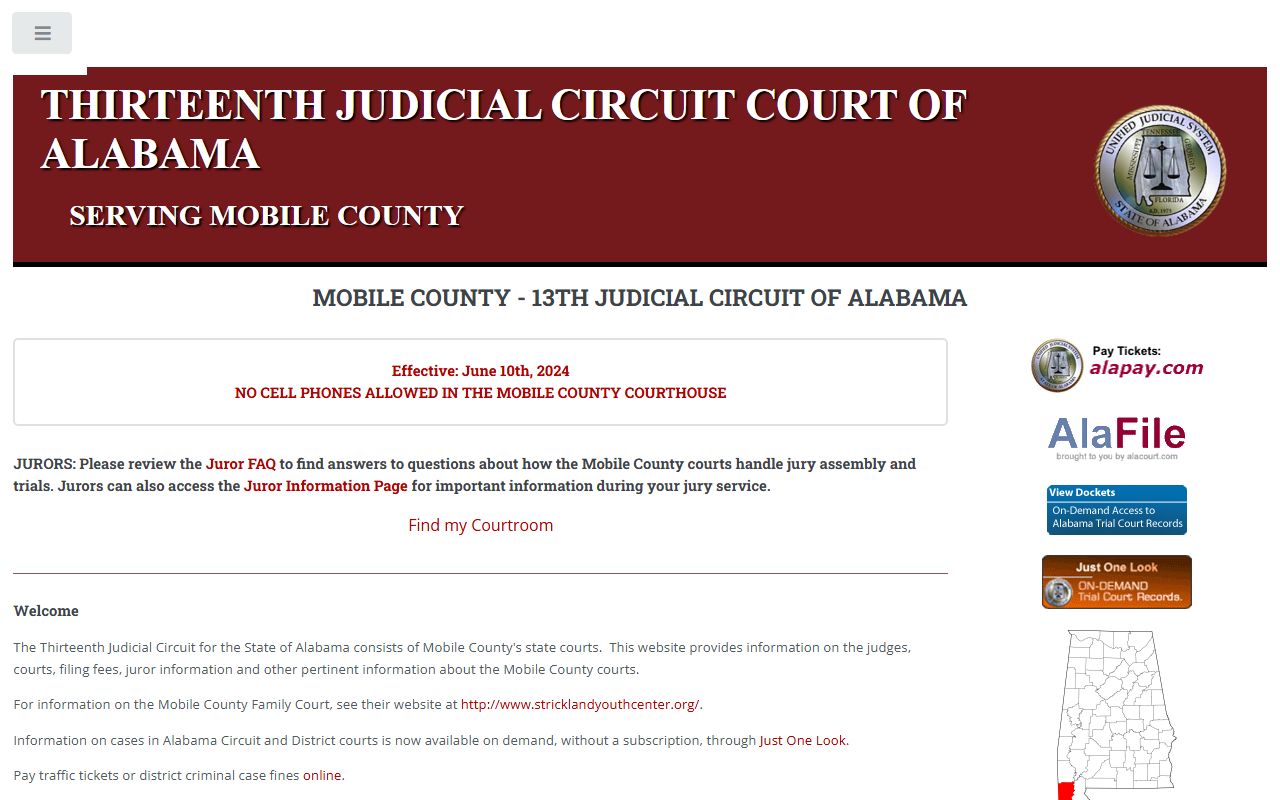
The page collects court divisions, jury info, judges, links, and the records portal on a single navigation bar, which is why we recommend it as the first stop for Mobile County court research.
The Mobile County Judicial System
Alabama's court hierarchy starts at the top with three appellate courts: the Alabama Supreme Court, the Alabama Court of Civil Appeals, and the Alabama Court of Criminal Appeals. The official Mobile court page notes that appellate courts review trial errors and do not change jury fact findings. Below the appellate level sit the circuit courts, which are courts of general jurisdiction. Mobile County is a one-county circuit, the Thirteenth Judicial Circuit, with eleven circuit judges.
Below the circuit court are courts of limited and special jurisdiction: district court, probate court, and municipal courts. District court handles small civil claims, traffic, preliminary criminal matters, and misdemeanors. Probate court handles wills, estates, guardianships, marriage certificates, and recording. Municipal courts handle city-ordinance and city-traffic matters. The presiding circuit judge for Mobile is Hon. S. Wesley Pipes, with the full bench listed on the circuit judges page.
Case flow: Arrest or Filing › District or Circuit Court › Trial › Judgment › Court of Civil or Criminal Appeals › Alabama Supreme Court
| Court | Jurisdiction | Case Types |
|---|---|---|
| Thirteenth Judicial Circuit Court | General jurisdiction trial court for Mobile County | Felonies, higher-value civil, domestic relations, appeals from lower courts |
| Mobile County District Court | Limited jurisdiction | Misdemeanors, preliminary criminal, traffic, small civil, small claims |
| Mobile County Family Court | Juvenile and family matters | Juvenile delinquency, dependency, family-court referrals |
| Mobile County Probate Court | Probate, recording, marriage | Wills, estates, guardianships, adoptions, marriage certificates, land records |
| Municipal Courts | City-jurisdiction | Municipal ordinance and city traffic |
The Mobile court site lays out the courthouse map for the public, including the floor for each court division and the address of the separate Family Court.
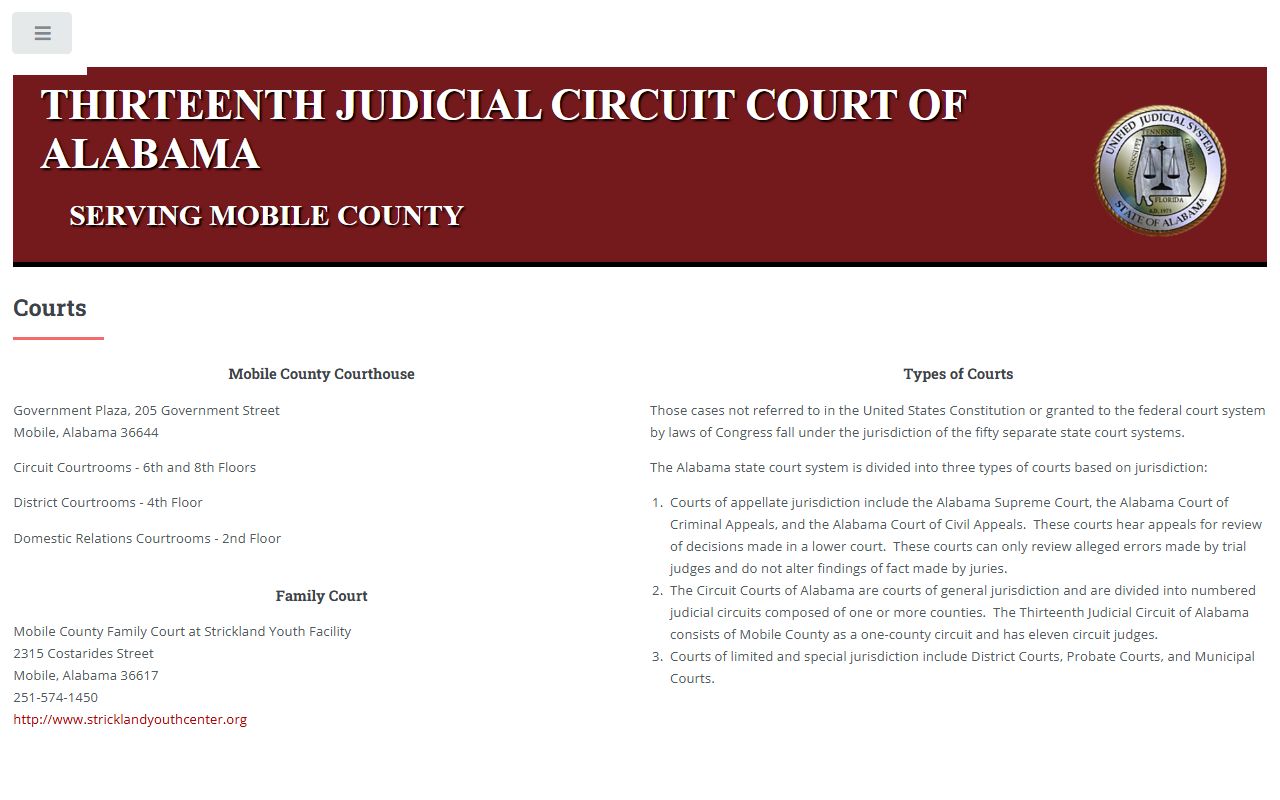
That page is the source we cite throughout for Mobile County circuit and district court structure.
Mobile County Courthouses
Mobile County operates from three court-related buildings downtown. Most state circuit and district court work happens in Government Plaza on Government Street. Family Court sits across town at Strickland Youth Facility on Costarides Street. Probate Court and the Recording Office work from the Government Center Annex next to Government Plaza. Each building has its own access path, so the right address matters.
Mobile County Courthouse / Government Plaza
205 Government Street
Mobile, AL 36644
Court Administration 251-574-8420
Mobile County Family Court
Strickland Youth Facility
2315 Costarides Street
Mobile, AL 36617
251-574-1450
Mobile Probate / Recording Office
Government Center Annex
151 Government Street
Mobile, AL 36602
251-574-6043
The Government Plaza page is the source for the building's floor assignments. Circuit courtrooms are on the 6th and 8th floors, district courtrooms on the 4th floor, and domestic relations courtrooms on the 2nd floor.
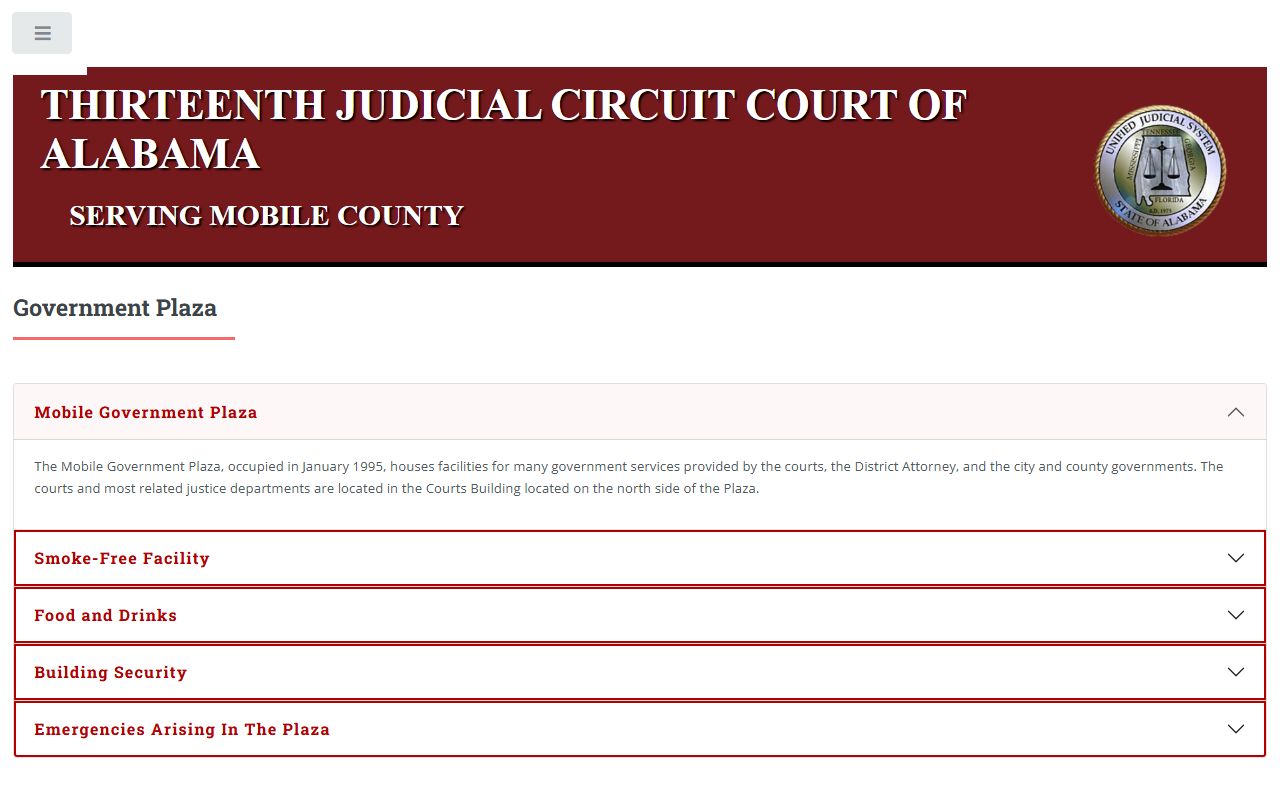
Government Plaza opened in January 1995 and combined courts, the District Attorney, city government, county government, and many related justice departments under one roof.
Types of Court Records Available in Mobile County
Mobile County court records fall into seven broad buckets, each tracked by a different office. The split matters because a divorce file lives with the circuit clerk, a recorded marriage certificate lives with Probate Court, and a jail booking lives with the Sheriff. Trying the wrong office wastes time. The county's court navigation already separates these tracks for circuit civil, district civil, small claims, traffic, juvenile, and probate.
The Probate Court adds a second list of record types because it holds wills, guardianships, conservatorships, adoptions, mental health commitments, condemnations, name changes, and small estates. These are different from circuit and district case records and use different portals.
- Civil records - Complaints, answers, judgments, garnishments, and small claims filed in circuit and district court.
- Criminal records - Felonies filed in circuit court and misdemeanors in district court, including indictments, pleas, and sentences.
- Domestic relations records - Divorce, custody, support, and protection-from-abuse cases on the 2nd floor of Government Plaza.
- Juvenile records - Handled at Family Court and confidential under Alabama law except for specific authorized access.
- Probate records - Wills, estates, guardianships, marriage certificates, and recorded land documents from Mobile Probate Court.
- Traffic records - Handled in district traffic court and the state's online traffic resolution system.
- Warrant and jail records - Held by the Mobile County Sheriff's Office and shown on the public warrant and jail rosters.
What Mobile County Court Records Show
A Mobile County case record has a fairly standard set of fields, but they vary by court and portal. The Alacourt docket page produces a daily-setting PDF rather than a full case profile. Benchmark WEB inside probate shows a case summary with fees, payments, and a green Pay Online button when costs are owed. The MCSO jail report shows name, date, charges, and bond amounts in a flat table. Below is the most common set of fields you will see across systems.
| Field | What It Shows |
|---|---|
| Case Number | Prefix plus year and sequence, such as CC25-2821, DC25-908658, M26-05-1958, or GJ25-110155 |
| Filing Date | When the case was filed or set |
| Parties | Plaintiff/defendant in civil; State/defendant in criminal; petitioner/respondent in probate |
| Charges / Cause | Statute or charge label with disposition where available |
| Disposition | Plea, judgment, dismissal, or sentence |
| Sentence / Judgment | Jail/prison time, probation, fines, restitution, or civil award |
| Court Costs / Bond | Fees owed, bond amount, garnishment status |
Public Access Laws for Mobile County Court Records
Alabama's public access framework starts with the public-records statute, but court records also depend on court rules, confidentiality statutes, and case type. The base rule is Alabama Code § 36-12-40, which gives Alabama citizens the right to inspect and copy public writings unless another law makes them confidential. The Alabama Rules of Judicial Administration add court-specific rules, and juvenile, adoption, and mental health records have separate restrictions. Practical access in Mobile County depends on which portal holds the record.
Key Statutes:
Alabama Code § 36-12-40 - Right of Alabama citizens to inspect and copy public writings unless restricted by other law.
Alabama Rule of Judicial Administration 33 - Governs public inspection, viewing, and copying of court records on payment of fees.
Alabama Code Title 15, Chapter 27 - Expungement of qualifying criminal records, with petition filed in the court that handled the case.
Alabama Code § 12-15-133 - Juvenile legal and social records are confidential except for authorized access.
The Alabama Judicial System publishes the Rules of Court library that contains each of these rules side by side. It is the official source for Rule 33 access procedures and for civil, criminal, and juvenile procedure rules.
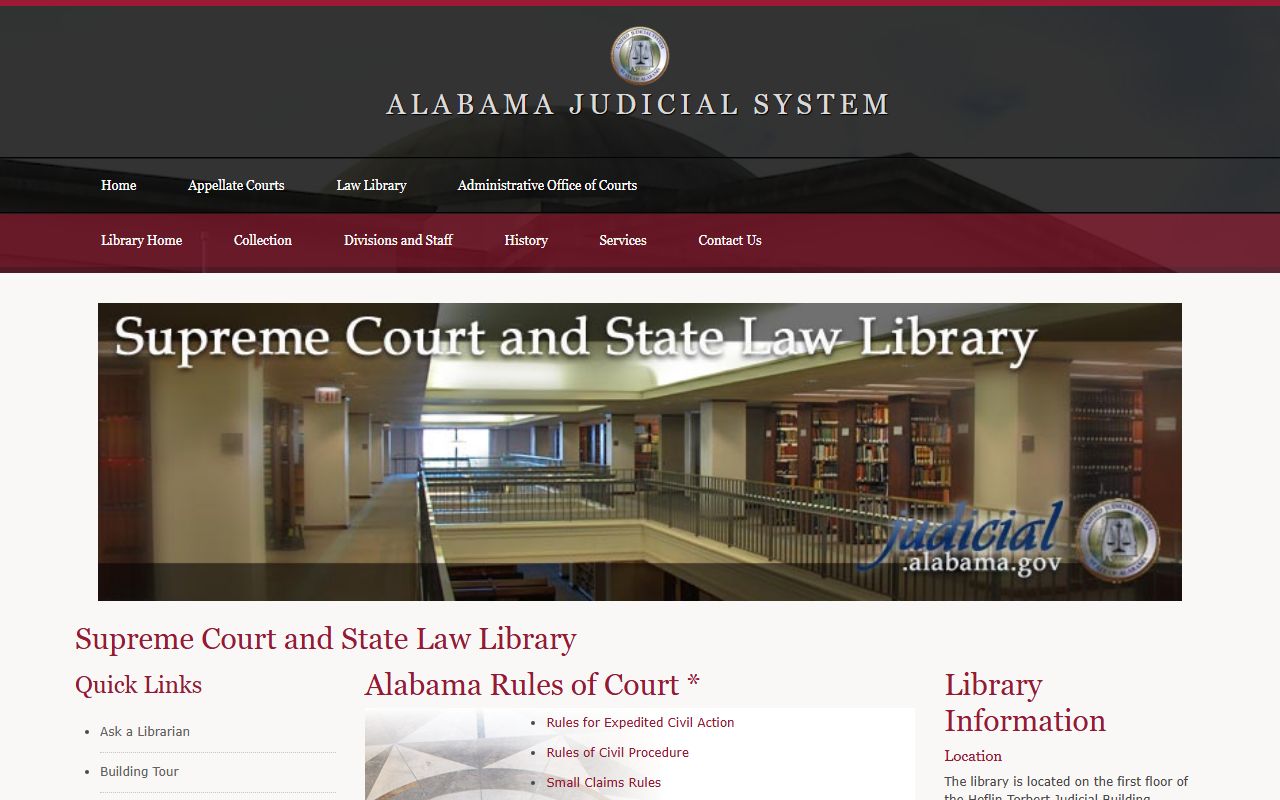
You can use the same library to find appellate rules, which control how an appeal from a Mobile County trial court runs.
Records That Are Restricted or Confidential
Several Mobile County record categories are not ordinary public records. Juvenile legal and social files are confidential under Alabama Code § 12-15-133. Adoption files are confidential at Probate Court. Mental health commitment files include medical data and are restricted. Youthful offender records are typically confidential. Sealed court records, sealed warrants, and grand jury materials are not public while sealed. Expunged records are removed from public access after a court grants the expungement petition.
If you need to view a sealed or restricted record, you generally have to file a motion in the court that holds the file. Some categories like adoption disclosure require a special petition under probate procedure. The ALEA expungement page explains the process for criminal records: the petitioner must first obtain a certified criminal history record from ALEA, then file the petition under Alabama law in the court that handled the case. ALEA does not give legal advice on eligibility, so an attorney is recommended.
Specialty Courts in Mobile County
Mobile County has historical ties to a county Drug Court. Judge Edmond G. Naman's official bio notes service as Special Prosecutor for the Mobile County Drug Court Program and work with Mobile County Corrections Victim Impact Panel and youth programs. Family-court intervention work also runs out of Strickland Youth Facility under the same judge. A current, fully detailed Drug Court program page was not on the official court site at the time we researched, so call the court directly for current eligibility and graduation rules.
The court site also links to the Alabama Online Traffic Resolution system, resolve.alacourt.gov, which is not a treatment court but works as an online specialty process for eligible traffic citations. Use it when a Mobile County ticket qualifies for online disposition.
Mobile County Sheriff and Jail
The Mobile County Sheriff's Office is at 510 South Royal Street, Mobile, AL 36603, phone 251-574-2423. Paul Burch is Sheriff. The official staff page says he was elected in November 2022 and sworn in January 2023. Command staff includes Chief Deputies Andrew Peak and Frank Cassady, Warden Pat Mitchell, and Deputy Warden Russell Mitchell. The Sheriff's Office runs Mobile County Metro Jail at 450 St. Emanuel Street.
Metro Jail houses an average of 1,500 inmates per day and serves both Mobile County and the City of Mobile. It includes a main facility and a minimum-security barracks. For full roster details and a step-by-step lookup, see Mobile County inmate records. For active warrants and turn-in steps, see warrant records. For people no longer in custody, see released inmates.
Marriage, Divorce, and Probate Records
Marriage and probate functions live at Mobile County Probate Court at the Government Center Annex on Government Street. Alabama stopped issuing marriage licenses on August 29, 2019 and now records marriage certificates instead. The Mobile County recording fee for a marriage certificate is $73, with additional certified copies $3 each. Probate also handles wills, estates, guardianships, conservatorships, adoptions, and name changes. Divorces, on the other hand, are domestic relations cases at the 2nd floor of Government Plaza, not probate. For details, see marriage and divorce records and probate records.
- Testator
- The person who made the will.
- Executor
- The person named in the will to carry it out.
- Intestate
- Dying without a valid will, in which case Alabama intestacy law sets shares.
- Conservator
- Person appointed to manage another person's property or finances.
- Guardian
- Person appointed to make personal decisions for another.
Mobile County Court Records Fees
Mobile County's recording and copy fees come from the Probate Court fee schedule and Alabama Code § 12-19-90. Probate photocopies run $1 per page, and probate certifications are $2 each. The Recording Office charges $2.50 per page for deeds plus taxes and fees, a $1 recordation stamp per instrument, and a $2 special recording fee per instrument. Marriage certificate recording is $73, with additional certified copies at $3 each.
| Item | Amount |
|---|---|
| Probate photocopy per page | $1.00 |
| Probate certification | $2.00 |
| Judicial file copy | $1.00 |
| Map copy | $10.00 |
| Marriage certificate recording | $73.00 |
| Additional certified marriage copy | $3.00 |
| Deed recording per page | $2.50 |
| Landmark WEB image purchase | $0.10/page |
| Landmark WEB subscription | $125/month |
| Phone payment convenience fee | 5% |
How to Interpret Mobile County Court Records
Mobile case numbers carry a court-type prefix that tells you where the case lives. CC is circuit criminal, DC is district criminal, DR is domestic relations, CV is civil, JU is juvenile, SM is small claims, and GJ refers to grand jury matters. Probate cases use their own prefix system. The MCSO charge label often reuses court prefixes, so a jail entry with CC25-2821 points back to a Mobile circuit criminal case from 2025. A charge that appears with no case prefix on the jail roster may still be in pretrial booking and not yet docketed.
A docket entry like "MOT" or "ORD" means motion or order. "DISP" is short for disposition, the outcome of a charge or claim. A "continuance" is a postponed setting. The MCSO inmate report shows bonds aligned to charges; a zero means no bond, which may be a hold rather than a true no-bond situation.
Accuracy and Record Limitations
Online Mobile County court data is not always current. The Alacourt docket page says some cases may not appear electronically and tells users to check with the clerk's office if a case is missing. Jail rosters update on their own clock and drop a person from the list once they leave custody, but the timing is not exact. Probate records have deep history but image fees apply, and some judicial forms are attorney-only inside Benchmark WEB. For any record you intend to rely on for a legal purpose, verify directly with the originating office.
Note: Confirm any name, date, charge, or bond amount with the Mobile County office that holds the record before acting on it.
History of Mobile County Courts
Mobile County's court identity is tied to downtown Mobile and the Government Plaza complex. The current Mobile Government Plaza was occupied in January 1995 and pulled court, district attorney, city, county, and justice department functions into one downtown site. Probate's recordkeeping reaches much deeper into the past: Landmark WEB includes real property records and marriage indexes from 1813 to the present and covers more than five million documents. Technology milestones include eRecording starting March 5, 2014; phone court-cost payments on January 20, 2016; online payments through Benchmark WEB on January 21, 2016; and a 2019 statewide shift from marriage licenses to recorded marriage certificates.
Self-Help and Legal Aid Resources
Several official resources help Mobile County residents who need legal help. South Alabama Volunteer Lawyers Program (SAVLP) serves Mobile, Baldwin, Clarke, and Washington counties from 118 N Royal Street, Suite 402, Mobile, AL 36602; client line 251-438-1102. The Alabama State Bar Lawyer Referral Service connects callers with paid attorneys; participating attorneys charge no more than $50 for an initial 30-minute consultation. Legal Services Alabama is the statewide civil legal aid program. Court forms are available at eForms.Alacourt.gov. Fines and traffic payments run through Alapay.com and traffic.alacourt.gov.
The Mobile court site keeps an up-to-date links page that points to each of these services along with the District Attorney and DHR. That page is worth bookmarking if you do not know which office to call first.
Frequently Asked Questions
How do I search a Mobile County court case online?
Open pa.alacourt.com for Mobile County, set a date, and optionally enter a last name. The system returns a docket PDF in an iframe. For probate cases, use Benchmark WEB after registering at benchmark.probate.mobilecountyal.gov. The free docket page does not give full case detail; for a full case profile you may need a paid Alacourt account or a clerk's office visit.
Where is the main Mobile County courthouse?
The Mobile County Courthouse sits inside Government Plaza at 205 Government Street, Mobile, Alabama 36644. Circuit courtrooms are on the 6th and 8th floors. District courtrooms are on the 4th floor. Domestic relations courtrooms are on the 2nd floor. Family Court is separate, at 2315 Costarides Street, phone 251-574-1450.
Does Mobile County still issue marriage licenses?
No. Since August 29, 2019, Alabama probate courts record marriage certificates instead of issuing licenses. The Mobile Probate fee to record a marriage certificate is $73, with $3 for each additional certified copy. Cash, money order, or credit card; no checks for marriage forms. More on the FAQ page.